Drakensberg

Sun City
March 30, 2022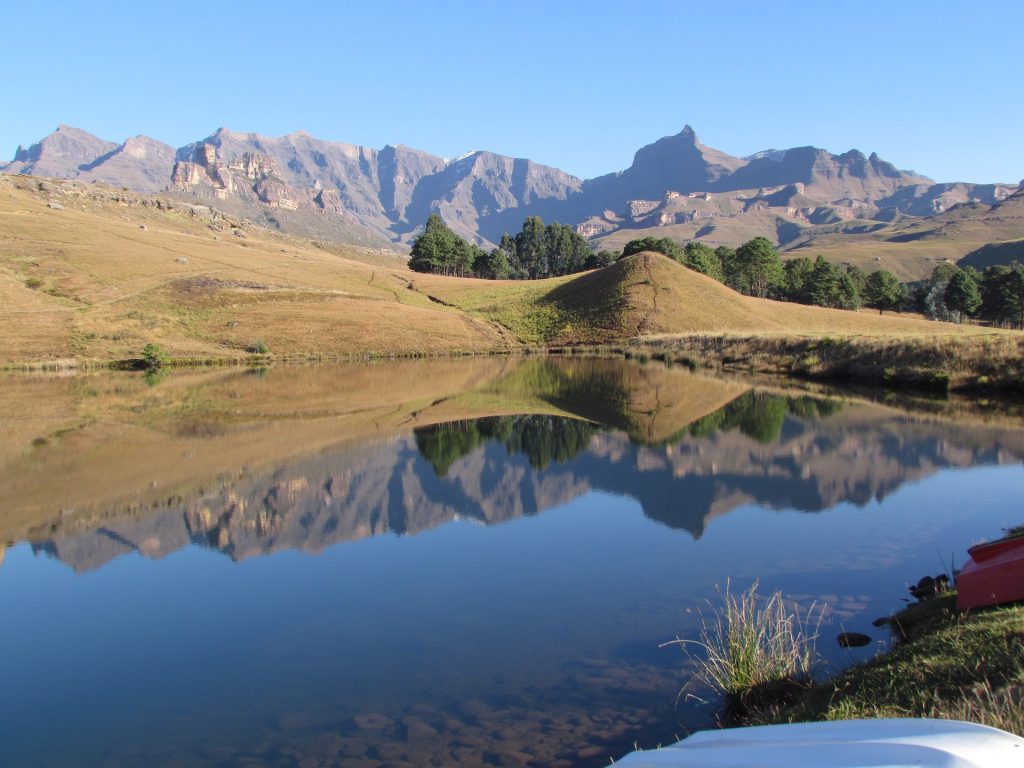
10 Top Things to Do in the Drakensberg
Visit Royal Natal’s Majestic Amphitheatre
Probably the most iconic physical landmark of the entire Drakensberg region, the Amphitheatre is a vast cliff face in the Royal Natal National Park. Stretching for over three miles in length and standing some 4,000 feet tall, it is more than 10 times bigger than the famous South Western face of Yosemite’s El Capitan. For some, admiring the Amphitheatre from ground level is sufficient; for others, a hike to the top of its highest peak (Mont-Aux-Sources) is the best way to appreciate its astonishing beauty. The hike takes roughly five hours and involves climbing two chain ladders.
Climb to the Top of Tugela Falls
The Amphitheatre is also home to Tugela Falls, the second-tallest waterfall in the world with five free-leaping streams that combine to create a total drop of 3,110 feet. When the waterfall is in full flow (at the end of summer), it is easily visible from the main road into Royal Natal National Park. For a closer view, hike the above route to the top of Mont-Aux-Sources, or opt for the easier Tugela Gorge route, which takes you to the base of the falls. The latter involves a boulder hop, and a small chain ladder begins at the Thendele Camp car park and takes around five hours to complete.
Explore the Kamberg Nature Reserve Trails
Located in the foothills of the central Drakensberg, in a horseshoe-shaped valley on the Mooi River, Kamberg Nature Reserve is a great destination for those in search of short but scenic hiking trails. Many of the routes are centered around the reserve’s abundant San rock art, which spans a period of over 4,000 years and provides an invaluable insight into the lives of Africa’s earliest people. The 2-mile hike to Game Pass Shelter is especially popular, providing access to some of the best-preserved rock art in the Drakensberg. Guides are available from the Rock Art Centre.
Discover More San Rock Art at Main Cave
For a further look at the ancient artwork of the San, take a trip to Main Cave, located roughly 30 minutes’ walk from the base camp at Giants Castle Nature Reserve. This sandstone shelter contains roughly 500 examples of San art, making it one of the biggest rock art sites in Southern Africa. Paintings include people, sacred eland antelopes, and several human figures with animal heads (thought to represent the belief that San shamans could take animal form to communicate with their ancestors). Regular guided tours are offered from the camp between 9 a.m. and 3 p.m. daily.
Photograph the Vultures at Giants Castle
If a distant view of the Drakensberg's mighty bearded vultures has you wanting a closer look, book a visit to the exclusive Lammergeyer Hide at Giants Castle. Ideal for birders and wildlife photographers, this spectacular hide is perched high in the mountains, putting you at eye level with the vultures as they come in to feed on bones left out for them. The bearded vultures aren’t the only attraction; endangered Cape vultures, jackal buzzards, and other raptors also frequent the area. To get there requires a 4x4 vehicle, advance booking, and a fee of 260 rands
Hike the Giant’s Cup Trail
For serious hikers, the self-guided Giant’s Cup Trail is a once-in-a-lifetime opportunity. It begins at the Sani Pass and winds its way for almost 37 miles through the southern foothills of the Maloti-Drakensberg Park. This UNESCO World Heritage Site is famous for its scenic beauty, and the trail is the only multi-day hike in the Drakensberg to provide hutted accommodation for all five nights along the way. All hikers must bring adequate weather protection, food, and water and must complete the Mountain Rescue Register at the Ezemvelo KZN Wildlife office in Cobham Nature Reserve before starting.
Challenge Your 4x4 Skills on the Sani Pass
Traversing the mountains between Underberg in KwaZulu-Natal and Mokhotlong in Lesotho, the Sani Pass is the stuff of legend. Renowned as one of the most challenging 4x4 routes in the country, it ascends to over 9,400 feet via a series of hair-raising gravel switchbacks. On the way, marvel at jaw-dropping scenery and keep an eye out for the locally endemic bearded vulture. At the top of the pass, celebrate your survival with a pint in the Highest Pub in Africa, located at Sani Mountain Lodge. 4x4 tours exist for those that don’t want to drive the pass themselves.
Climb to the Top of Cathedral Peak
Located northeast of the Lesotho border, Cathedral Peak is one of only a handful of free-standing peaks separated from the rest of the escarpment by thousands of years of erosion. Its perfect triangular shape makes it an easily recognizable Drakensberg landmark and acts as a siren call for experienced hikers with a head for heights and excellent fitness. Although it isn’t a technical hike (you won’t need ropes), the journey to the 9,855-foot summit is a challenging one with several precipitous edges. It can be tackled independently or on a guided hike from nearby Cathedral Peak Hotel—allow eight to 10 hours round-trip.
Book a Tasting at Cathedral Peak Wine Estate
If climbing to the summit of Cathedral Peak sounds a little too strenuous, enjoy the view from ground level at the fantastically scenic Cathedral Peak Wine Estate. Founded in 2007 as a small-batch vineyard to produce uniquely South African pinotage and merlot wines, the vineyard now offers all kinds of varietals, from sauvignon blanc to blanc de noir. Wine tastings are offered every day except Tuesday from 9:30 a.m. to 4 p.m. and cost just 10 rands per person. To elevate your experience on the mountain-view veranda, opt to pair yours with one of the estate’s artisan cheese platters.
Explore Drakensberg History at Himeville Museum
Himeville Museum may be small, but it’s also one of the best-respected rural museums in South Africa. Located close to the start of the Sani Pass, it began life in 1899 as a prison but was converted into a museum in 1976 and recognized as a National Monument two years later. Its exhibits provide a comprehensive overview of Drakensberg's history, from Stone Age fossils and prehistoric San artifacts to displays explaining the arrival of the European settlers and the cause and effect of the Anglo Boer War and both World Wars. The museum is open from 9 a.m., every day except Monday.
Source: https://www.tripsavvy.com/things-to-do-in-the-drakensberg-south-africa-5194162